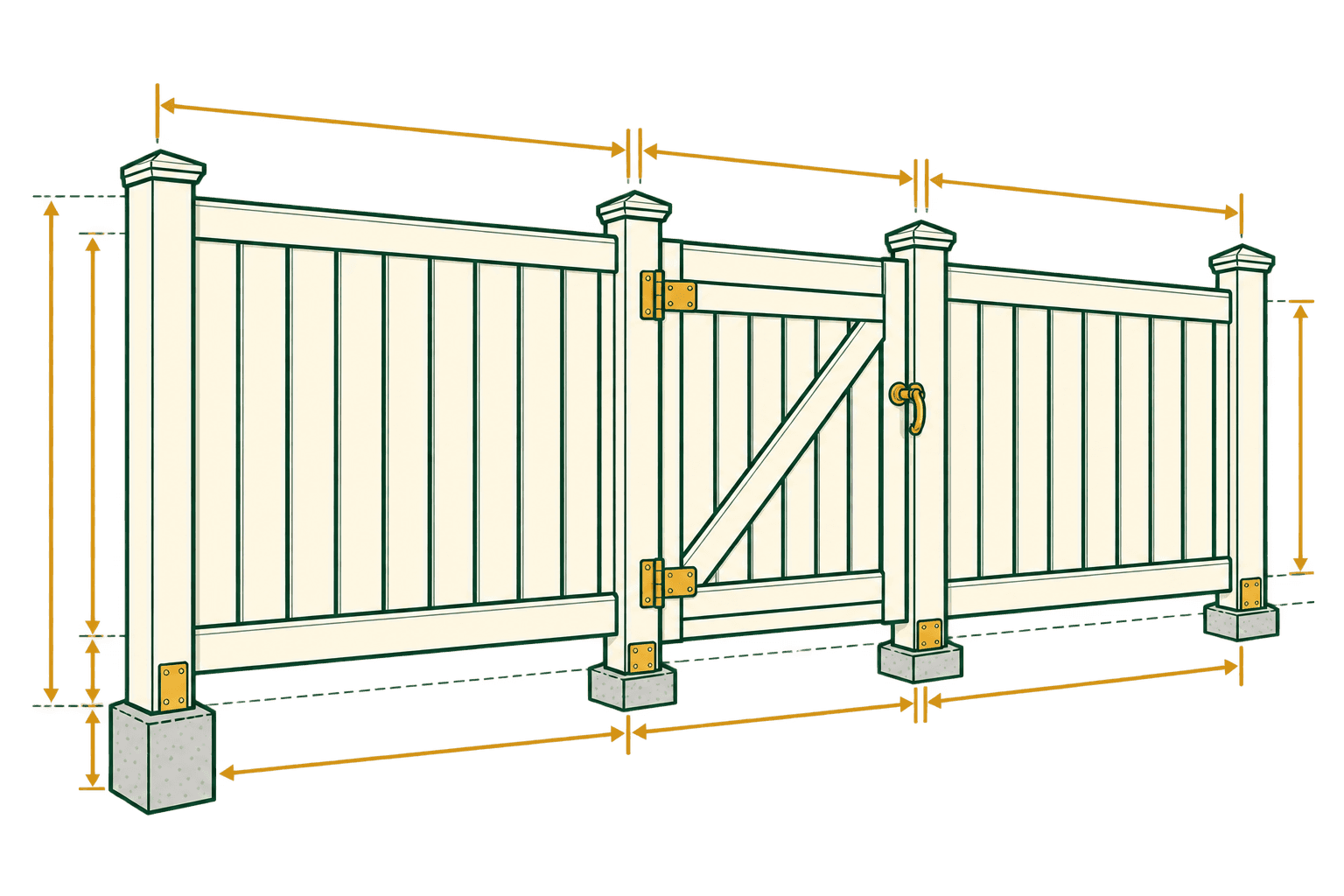
Plan your fencing project
A fence estimate is easier to trust when the line is split into the runs you will actually build. A front run may have a gate, a side run may share a corner, and the picket field may start after a post or end setback. Entering those details separately helps you see what the calculator is counting and what still belongs in the final layout.
Use the panel tool when you are planning panels, gates, and layout posts. Use the post tool for equal spacing on a straight run, the picket tool for a repeating gap, and the concrete tool when you need a rough bag quantity around posts. These are material planning aids. Fence design still depends on the system, soil, grade, wind, gates, bracing, local requirements, and the final site plan.
Start with a simple site sketch. Label corners, ends, gates, changes in direction, and any place where the fence meets an existing structure. Measure each straight run instead of estimating from a map or property-line description. If two runs meet, decide whether the corner uses one shared post or two posts in the system you plan to buy.
The numbers become more useful when you compare them with the actual fence product. Check the installed panel width, post dimensions, gate kit, hardware, and concrete yield. Keep space for posts and gates out of a picket field measurement. When the fence is on a slope or carries a gate, use the calculators for an early list and have the final layout reviewed before ordering.
Take photos of corners and gates with your sketch, but do not rely on the photos for scale. Write down where the measurement starts and ends, and note any existing wall or post that changes the run. When a supplier uses different terms for panels, rails, posts, or concrete yield, copy the value from the product information into the matching field and keep the original label nearby.
Choose the right calculator
Start with the part of the fence you are trying to buy or lay out.
- Fence Panel CalculatorEstimate fence panels, layout posts, gate posts, and cut remainder across multiple runs.
- Fence Post CalculatorCalculate fence spaces, post count, and actual spacing for a straight run.
- Fence Picket Spacing CalculatorFind picket count, actual gap, and center-to-center spacing for a fence run.
- Fence Post Concrete CalculatorEstimate concrete volume and bags for round or square fence posts.
Planning considerations
- Measure each straight run and note gates, end points, and connected corners.
- Use actual panel or picket dimensions and the maximum spacing from the plan or fence system.
- Keep structural, footing, frost, wind, soil, and local code decisions separate from the material count.
Before you buy
- Confirm panel width, gate kit size, post dimensions, picket width, and matching hardware.
- Add corner, end, gate, brace, and terminal posts that a straight-run count does not include.
- Use bag yield from the concrete product and plan mixing, bracing, access, and disposal.